Imagine a world where your refrigerator speaks your language, your car drives itself, and your doctor can diagnose you with a quick video chat. Sounds like a sci-fi movie, right? Yet, this kind of future is fast approaching. In a world buzzing with innovation, knowing what’s on the horizon helps you prepare (or at least pack a better snack for the robot uprising). Here are ten compelling predictions that paint a picture of what’s to come. Buckle up: it’s going to be a fascinating ride.
Technological Advancements in Everyday Life
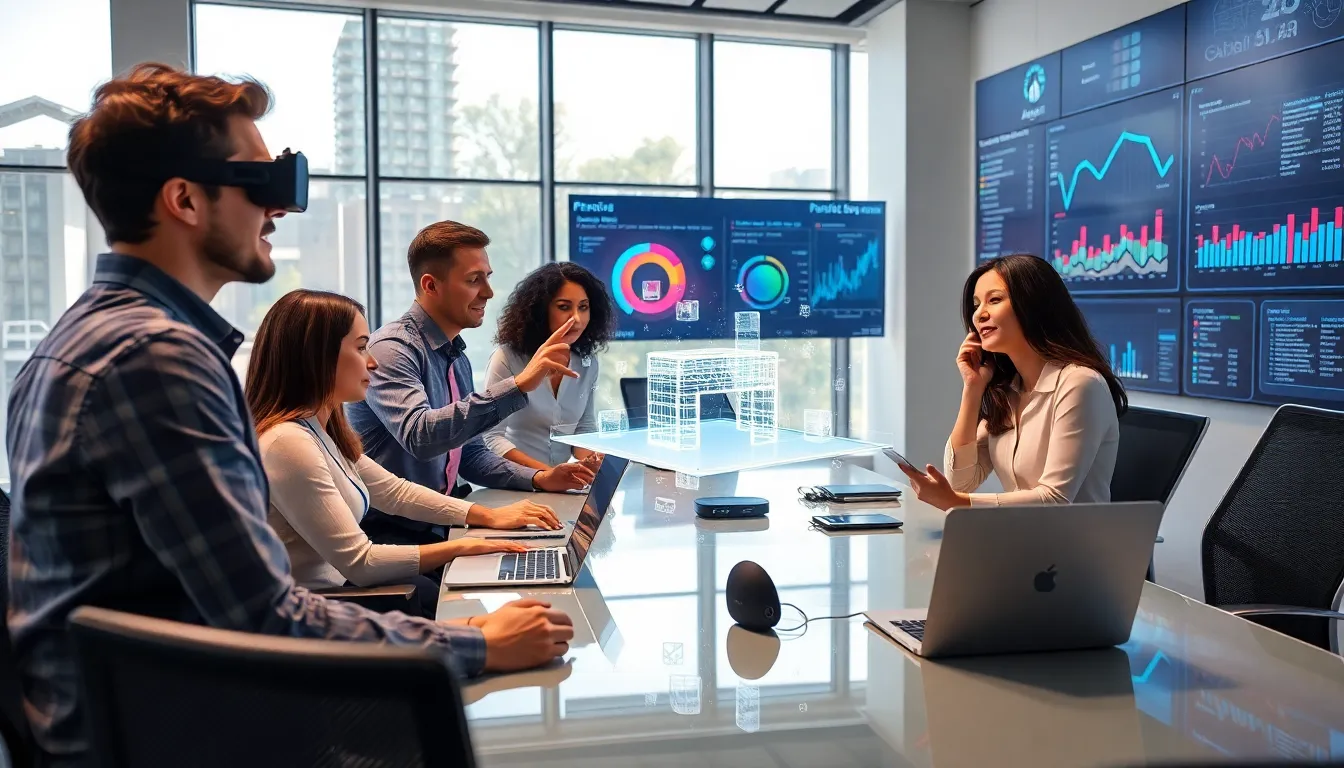
AI Integration and Automation
Think about it: artificial intelligence is no longer a concept confined to the pages of a science fiction novel. It’s already making its mark on everyday life. From personal assistants like Siri and Alexa handling simple tasks to chatbots providing customer service, the integration of AI will deepen significantly.
In the coming years, expect AI to take over more complex jobs, automating tedious tasks across multiple industries. For example, in manufacturing, robotics will streamline production lines, reducing costs and improving efficiency. This shift could revolutionize sectors like retail, with virtual fitting rooms and personalized shopping assistants enhancing customer experiences.
As a result, professionals may find themselves needing to adapt and upskill, focusing on roles that require critical thinking and creativity, qualities machines cannot replicate easily.
The Rise of Virtual and Augmented Reality
Get ready to step into the future with augmented reality (AR) and virtual reality (VR). These technologies are more than just a gimmick: they’re poised to redefine entertainment, education, and social interaction.
Picture this: attending a concert without leaving your living room or collaborating on projects with colleagues from around the globe through a shared virtual workspace. Schools might even adopt AR and VR for immersive learning experiences, allowing students to explore historical events or complex scientific concepts in 3D. The potential here is limitless, transforming how people connect and engage with the world.
Sustainable Energy Solutions
Innovations in Renewable Resources
As climate change remains a pressing global issue, investments in renewable energy solutions are set to skyrocket. Innovations in solar, wind, and hydropower technology will make sustainable energy more accessible and affordable.
Governments and organizations will continue pushing for cleaner alternatives, resulting in energy systems that rely less on fossil fuels. Imagine solar panels integrated into roadways or windows capturing solar energy. This shift will not only help the environment but also stimulate job growth and create entirely new industries focused on sustainability.
Besides, the potential for breakthroughs in energy storage technology will allow us to harness renewable energy more effectively, ensuring reliability even when the sun isn’t shining or the wind isn’t blowing.
Smart Cities and Infrastructure
Rising urbanization is demanding smarter infrastructure. Cities will evolve into interconnected ecosystems powered by technology. With sensors embedded in roadways and smart traffic lights easing congestion, daily commutes might soon be more efficient.
Smart buildings will monitor energy consumption and adapt accordingly, while waste management systems will optimize collection routes, reducing the carbon footprint. The future city is not just technological: it’s a collaborative effort that enhances the quality of life for its residents.
Health and Medicine Evolution
Personalized Medicine and Genetic Engineering
The future of health care is personal. Advances in genetic engineering, like CRISPR technology, will pave the way for treatments tailored to individual genetic makeups. This means that instead of a one-size-fits-all approach, individuals will receive medical attention based on their unique DNA, improving effectiveness and reducing side effects.
Imagine being vaccinated in a way that not only targets a virus but also enhances your overall genetic resistance to diseases. Sounds incredible, right? This capability will transform how medical professionals approach preventative care and treatment.
Telemedicine and Remote Healthcare
As technology evolves, so does healthcare delivery. Telemedicine has already begun to reshape doctor-patient interactions, allowing consultations via video calls. The pandemic accelerated this trend, and it’s here to stay.
Future advancements will make remote healthcare even more widespread, prioritizing convenience and accessibility. Cutting-edge wearable devices will monitor health metrics in real-time, alerting healthcare providers of any issues before they escalate. This proactive approach could lead to healthier populations and a reduction in hospital visits.
Shifts in Global Economics
The Emergence of New Financial Models
In an ever-changing financial landscape, traditional models are becoming outdated. Cryptocurrencies and blockchain technology are likely to revolutionize the concept of currency and investments. The power to create decentralized financial systems democratizes access to wealth and opportunities.
As businesses embrace these technologies, financial transactions will become faster and more secure, leading to increased transparency and reduced costs. Picture a world where banking is less about visiting brick-and-mortar institutions and more about clicks and virtual wallets.
Impact of Climate Change on Global Markets
As climate change becomes an undeniable reality, it will increasingly influence global markets and economics. Industries that rely heavily on carbon-intensive practices may struggle, while green sectors will thrive. Investors are already showing heightened interest in sustainable companies, predicting a shift in how businesses operate and determine their value.
Expect policies promoting sustainability to drive investment and innovation, leading to healthier ecosystems and more resilient economies. In this new landscape, those who adapt quickly will not only survive but thrive in a data-driven marketplace.
Social and Cultural Transformations
The Future of Work and Education
The landscapes of work and education are undergoing significant transformations. The rise of remote work has redefined traditional office environments, pushing organizations to rethink how they operate. Increased flexibility will allow employees to balance personal and professional lives more effectively.
Besides, education systems are adapting to provide learners with essential skills for the future job market. Online platforms will proliferate, offering accessible courses that cater to various learning styles. The focus will shift from rote memorization to critical thinking and problem-solving, preparing students for jobs that may not even exist yet.
Changing Dynamics in Global Relationships
As the world becomes more interconnected, the dynamics of global relationships will shift. International collaboration on issues like climate change and health care will take center stage. Countries will need to work together, sharing knowledge and resources to tackle complex challenges.
In this interconnected space, global diplomacy will grow more crucial. National interests will have to balance with worldwide priorities, fostering co-operation across borders, cultures, and economies.